Why Smart Plugs Are the Best First Step for Your Smart Home
When people think of upgrading their homes with the latest technology, they often imagine elaborate lighting systems, expensive voice-controlled entertainment centers, or complex security networks. While those are certainly exciting additions, they often come with a hefty price tag and a steep learning curve. If you want to dip your toes into the world of home automation without breaking the bank, the humble smart plug is the absolute best place to start. A smart plug acts as an intermediary between your electrical outlet and whatever appliance you plug into it. By connecting to your home’s Wi-Fi network, it grants you the power to turn “dumb” appliances on and off using your smartphone or voice assistant.
But the benefits of smart plugs extend far beyond simple convenience. One of their most powerful, yet often overlooked, features is their ability to help you save money and conserve energy. Phantom power drain—the electricity consumed by appliances even when they are turned off but still plugged in—can account for a surprisingly large portion of your monthly energy bill. By using smart plugs to completely sever the power supply to these devices on a schedule, or monitoring the energy usage of high-draw appliances, you can make smarter, more eco-friendly choices. In this article, we will explore five of the best smart plugs on the market that are specifically designed to help you optimize your energy usage and keep your hard-earned money in your wallet.
1. TP-Link Kasa Smart Wi-Fi Plug Mini (EP10)
TP-Link’s Kasa line of smart home products has long been a favorite among tech enthusiasts for its reliability and incredibly user-friendly app interface. The Kasa Smart Wi-Fi Plug Mini (EP10) is a prime example of why this brand is so beloved. As the name suggests, this plug features a compact design that ensures it will not block the second socket on your wall outlet, a common annoyance with older, bulkier smart plugs.
Where the Kasa Mini truly shines in the energy-saving department is through its intuitive scheduling features. Using the Kasa app, you can easily set specific times for your devices to turn on and off. For instance, you can schedule your coffee maker to turn on right before you wake up and ensure your living room lamps automatically shut off at midnight. Furthermore, it offers an “Away Mode,” which randomly turns connected lights on and off to simulate someone being home while you are on vacation, enhancing security without leaving lights burning 24/7. It integrates seamlessly with both Amazon Alexa and Google Assistant, allowing for effortless voice control. While it does lack the advanced energy monitoring features of some premium models, its affordability and ease of use make it an outstanding tool for basic energy management.
2. Wemo Smart Plug with Thread
Belkin’s Wemo brand has been a stalwart in the smart home space for years, and their latest iteration, the Wemo Smart Plug with Thread, brings a significant technological leap to the table. Thread is a low-power, mesh networking technology that represents the future of smart home connectivity. Unlike traditional Wi-Fi, which can become congested if you have too many devices connected, Thread creates a dedicated network for your smart home gadgets, resulting in faster response times and far greater reliability.
For Apple users, the Wemo Smart Plug with Thread is practically a must-have. It is heavily optimized for Apple HomeKit, allowing you to incorporate it into complex automations using the Apple Home app. While it does not offer built-in energy monitoring tracking the specific kilowatt-hours consumed, its integration into the HomeKit ecosystem allows for incredibly precise scheduling and location-based triggers. You can set it up so that your power-hungry space heater automatically turns off the moment your iPhone detects you have left the house. This level of granular, automated control is essential for eliminating wasted energy. It is slightly more expensive than entry-level plugs, but the stability provided by Thread networking makes it a worthy investment for a seamless smart home experience.
3. Wyze Plug
If you are building a smart home on a strict budget, it is hard to beat the value proposition offered by Wyze. Known for shaking up the market with their incredibly affordable yet high-quality security cameras, Wyze has applied that same philosophy to the Wyze Plug. Available in two-packs for roughly the cost of a single plug from other major brands, the Wyze Plug lowers the barrier to entry for energy management significantly.
Do not let the low price tag fool you; the Wyze Plug is packed with features. It connects directly to your 2.4GHz Wi-Fi network without the need for an external hub, and it works flawlessly with both Alexa and Google Assistant. Through the Wyze app, you can set timers, create detailed schedules, and group multiple plugs together. Grouping is particularly useful for energy saving; you can group all your holiday decorations or entertainment center devices together and power them all down with a single tap or voice command. While the basic Wyze plug doesn’t have native energy monitoring, they do offer a slightly upgraded version (the Wyze Plug Outdoor) that monitors consumption. For indoor use, simply having the ability to schedule and remotely cut power to idle devices at this price point is a huge win for your energy bill.
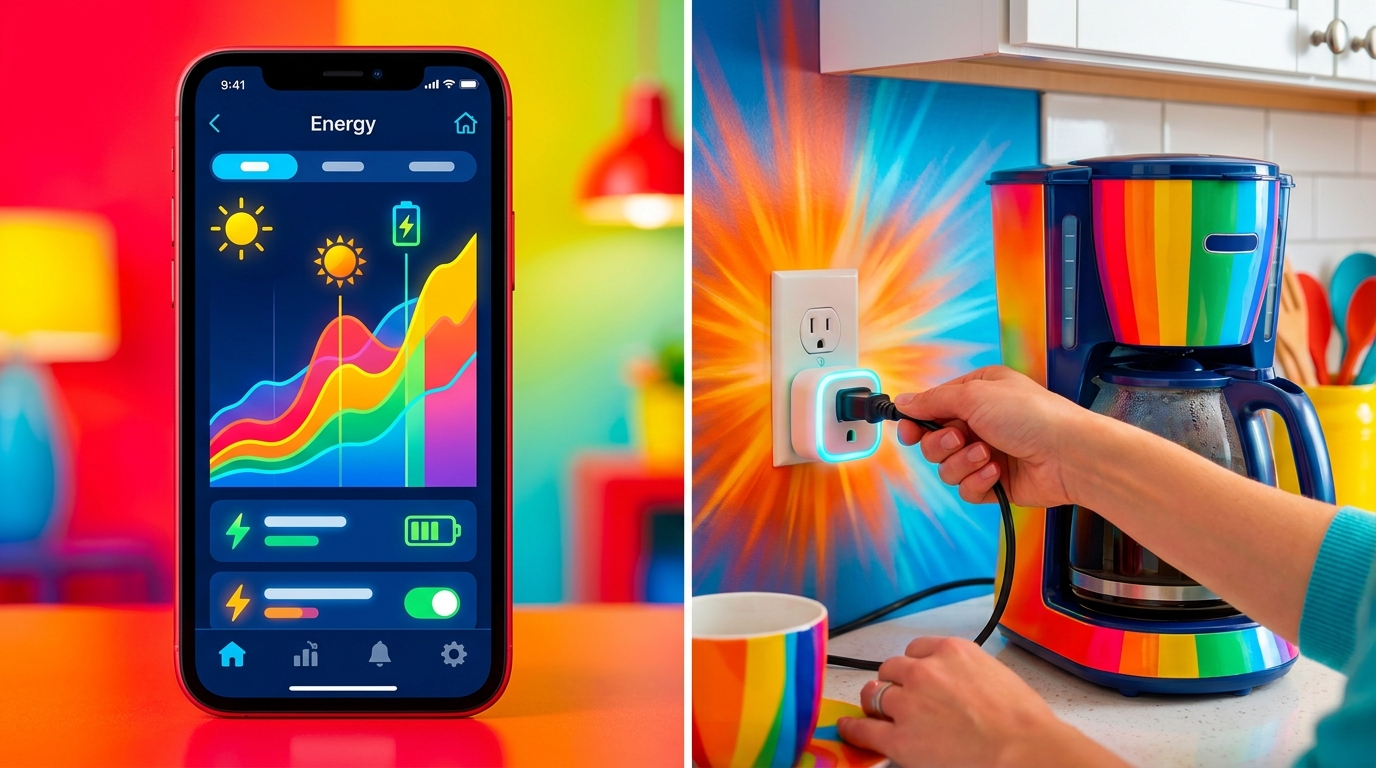
4. Sense Energy Monitor (with Smart Plug Integration)
While technically a whole-home energy monitor rather than just a smart plug, the Sense Energy Monitor deserves a mention here because of how it integrates with smart plugs to provide the ultimate energy-saving solution. The Sense monitor is installed directly into your home’s electrical panel, where it “listens” to the electrical noise in your house to identify and track the energy usage of individual appliances over time.
Where this gets incredibly powerful is its integration with smart plugs like the Kasa series. If Sense struggles to identify a specific, quieter device (like a television or a laptop charger), you can connect that device to a supported smart plug. Sense then pulls the highly accurate, real-time energy usage data directly from the plug. This gives you a crystal-clear picture of exactly which devices are costing you the most money. Armed with this granular data, you can create hyper-specific schedules to turn off those vampire devices when they are not needed. It is a more significant upfront investment and requires professional installation at the breaker box, but for the serious data nerd looking to maximize their home’s energy efficiency, this combination is unparalleled.
5. Eve Energy (Matter & Thread)
For those who want premium features, top-tier security, and deep data analytics, the Eve Energy smart plug is the gold standard. Eve has long been a favorite among Apple HomeKit users due to its strict adherence to privacy—Eve does not require an account, and your data never leaves your home network. Recently, Eve upgraded this plug to support both Thread networking and the new Matter standard. Matter ensures that this plug will work seamlessly across Apple, Google, Amazon, and Samsung ecosystems, future-proofing your investment.
The true standout feature of the Eve Energy, however, is its comprehensive energy monitoring capabilities. The Eve app provides beautiful, detailed graphs breaking down your energy consumption by day, week, month, and year. You can even input your specific utility rate, and the app will calculate exactly how much money a specific appliance is costing you. Discovering that an old basement refrigerator is costing you $15 a month in electricity makes the decision to upgrade or unplug it much easier. By combining this detailed insight with robust scheduling and automation features, the Eve Energy plug empowers you to make informed decisions that drastically reduce your carbon footprint and monthly expenses.
Conclusion
Smart plugs are much more than just a novelty for turning on a lamp from the couch. When used thoughtfully, they are powerful tools for managing your home’s energy consumption. Whether you opt for the budget-friendly Wyze Plug, the reliable Kasa Mini, or the data-rich Eve Energy, incorporating these devices into your daily routines can eliminate phantom power drain and ensure your appliances are only running when you actually need them. Start small, identify the worst energy-wasting culprits in your home, and watch as your smart home setup pays for itself over time.